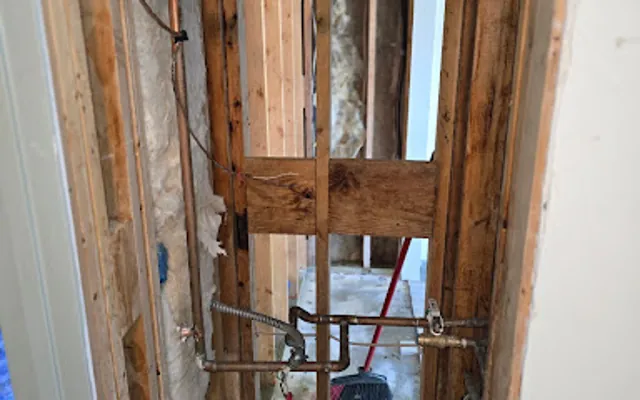
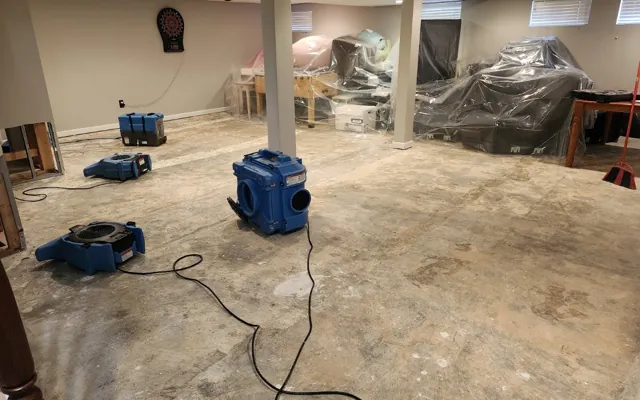
Aging cast-iron drains and supply lines in Pasadena burst regularly during freezes. Crews arrive fast to shut off water, extract the flood, and dry your home with commercial equipment before structural damage and mold take hold.

Crews identify whether the burst is in a supply line, drain, or water heater line serving your Pasadena home and shut off water immediately to stop loss through subfloor and walls.
Standing water in subfloor spaces, wall cavities, and interior rooms is pumped out before it causes structural failure or mold. Multiple extraction units work simultaneously in Pasadena homes to clear water fast.
Commercial dehumidifiers and air movers run continuously while crews take daily moisture readings of the slab, subfloor, and walls. Drying is complete when all readings confirm safe, dry conditions throughout.

Frozen pipe water damage in Pasadena typically runs $1,500 to $9,000, depending on where the pipe burst, how far water traveled across the slab, and how many rooms were affected. A garage or attic line that drains into one room costs far less to repair than a burst that reaches multiple rooms overnight. Most homeowner's policies cover sudden pipe failure; crews document the water's path for your adjuster.
Pasadena's housing stock spans decades of growth along the Ship Channel, with older neighborhoods holding cast-iron supply and drain lines that fail first in cold weather. Dense population density means one burst can send water through shared walls into adjacent homes. Your home's slab is vulnerable here. Pasadena's older cast-iron infrastructure becomes brittle in rare freezing events. The Ship Channel area has shifting clay soil that cracks buried pipes. Dense residential neighborhoods share common drainage lines, so one burst affects multiple properties at once. The area's intense humidity accelerates mold growth in damp materials. From Pasadena, crews also cover nearby Fresno, Alvin, Webster, Manvel, Arcola, Nassau Bay. See every neighborhood and town on the full service area page.
See all areas servedEvery loss is photographed, measured, and logged from the first visit, so the paperwork holds up with your insurance carrier.
Technicians follow recognized IICRC drying standards and prove the work with daily moisture readings, not guesswork.
Emergency dispatch any hour of the day or night, with a real crew on the way, not a callback in the morning.
A real crew dispatched any hour, not a callback in the morning.
Trained technicians following recognized IICRC drying standards.
Truck-mounted, portable, and submersible for any size loss.
The loss is documented and billed to the carrier directly.
Cast-iron lines installed decades ago become brittle and fail, especially during freezing events. The heavy clay soil under Pasadena shifts with moisture and temperature changes, cracking buried pipes. Shared drainage lines in dense neighborhoods mean one burst can affect several homes at once.
Mold can begin growing in damp drywall and insulation within 24 to 48 hours, especially in Pasadena's humid climate. Crews prioritize extraction and continuous dehumidification to keep humidity below 55% and prevent mold spores from germinating. Daily moisture checks ensure crews catch any lingering damp before mold takes hold.
Crews are on call 24 hours a day and can be on the way to Pasadena within the hour.
Call (832) 979-6332