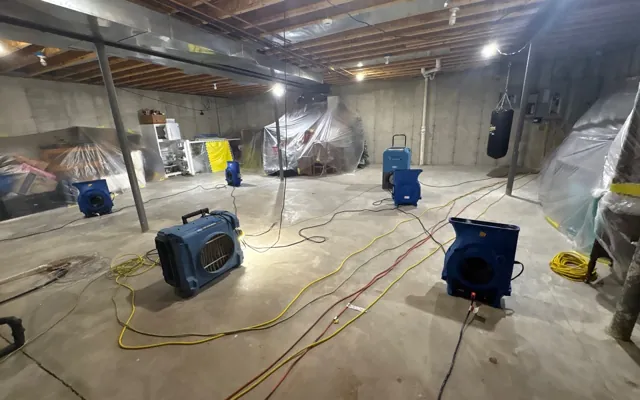
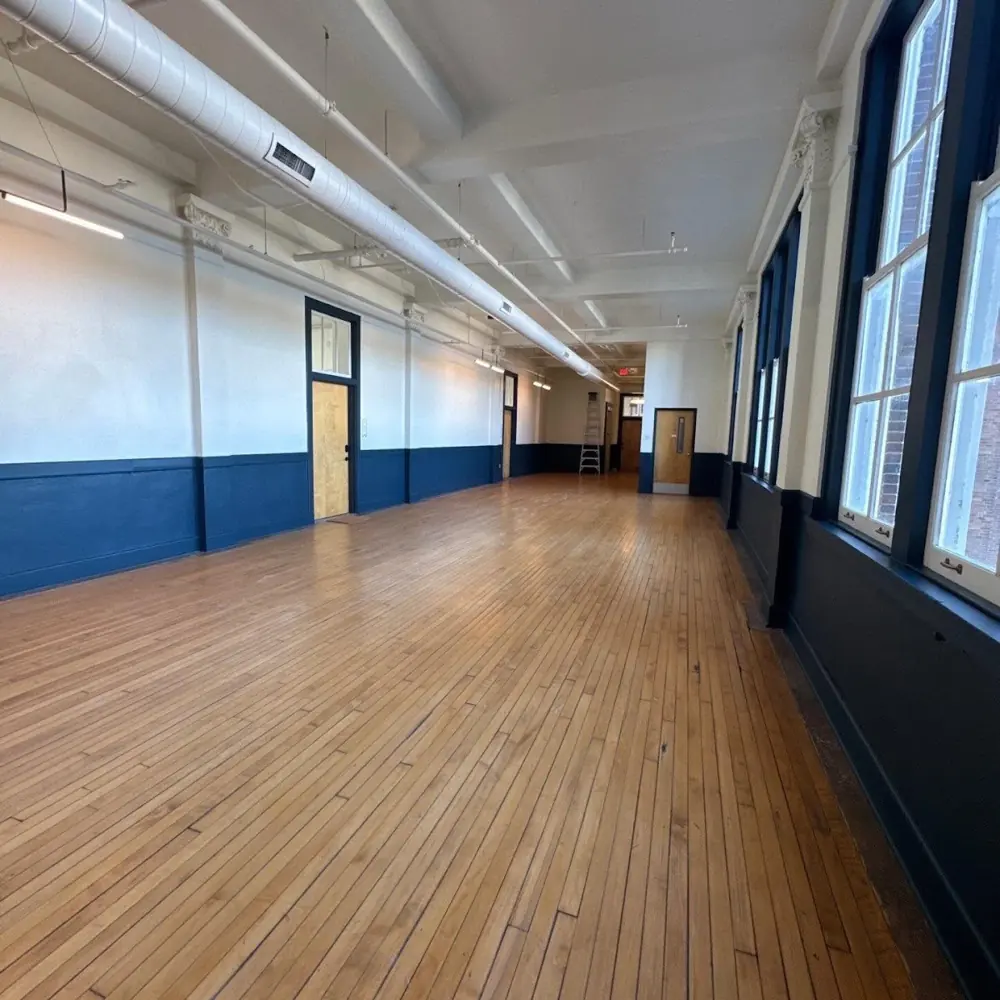
When a tropical system stalls over Brazoria County and rain falls for hours, water finds the lowest point, a sunken garage bay, a below-grade utility room, a partially subterranean storm shelter. Seco Restoration answers Pearland calls in about an hour, IICRC-standard and local.

Crews identify exactly which below-grade space is affected, whether it is a sunken garage bay, a utility room, or a storm shelter, and check for a source that is still active.
Truck-mounted and portable pumps remove standing water from the sunken or below-grade area, and crews check for water still trapped behind block walls or under flooring.
Dehumidifiers and air movers dry concrete, framing, and any drywall in the space while crews track moisture daily so drying stops only once readings are safe.
Crews repair damaged drywall, flooring, or shelving, and can recommend drainage or grading improvements so the same storm does not flood the space again next season.

While help is on the way, these first steps, done only where it is safe, limit the damage and protect the insurance claim.
Shut the supply off at the source, or close the home's main valve if the source is not obvious. Stopping the flow limits the damage more than anything else.
Switch off electricity to the affected area, but only if the breaker can be reached without standing in or touching the water.
Get a crew dispatched right away. The sooner extraction and drying begin, the more flooring, drywall, and belongings can be saved.
Take photos and a short video of the water and the affected rooms before anything is moved, so the insurance claim starts strong.
Cleaning up a flooded below-grade space in Pearland, whether it is a garage bay, a utility room, or a storm shelter, typically runs $1,200 to $5,000, depending on square footage, how long water sat, and whether structural drying equipment is needed for several days. Larger garden-level additions cost more. Homeowner's insurance often covers sudden storm and hurricane flooding, and crews document everything for your adjuster.
Crews reach Pearland and Greater Houston fast, from the historic Old Townsite and Brookside Village to Friendswood, Manvel, and nearby Pasadena and Alvin. See the full list on the areas served across Pearland page.
See all areas servedEvery loss is photographed, measured, and logged from the first visit, so the paperwork holds up with your insurance carrier.
Technicians follow recognized IICRC drying standards and prove the work with daily moisture readings, not guesswork.
Emergency dispatch any hour of the day or night, with a real crew on the way, not a callback in the morning.
A real crew dispatched any hour, not a callback in the morning.
Trained technicians following recognized IICRC drying standards.
Truck-mounted, portable, and submersible for any size loss.
The loss is documented and billed to the carrier directly.
Almost never. Nearly all Pearland homes are built slab-on-grade over expansive clay soil, which makes a true dug basement impractical and rare. What you are more likely to have is a sunken garage bay, a below-grade utility room, or a partially subterranean storm shelter, and those spaces can still flood in heavy rain.
A sunken garage bay sits below the surrounding driveway and yard grade, so it collects runoff the same way a bowl collects rain. During hurricane season or a heavy downpour, that runoff can rise faster than a door seal or floor drain can handle, pushing water inside.
Most homeowner's policies cover sudden water intrusion from storms or plumbing failures into a garage, utility room, or storm shelter. Damage caused by long-term groundwater seepage or poor grading that was never addressed is treated differently. Crews document the storm event and timeline to support your claim.
Faster than most people expect. Pearland's year-round humidity means concrete, drywall, and stored items in a below-grade space can start growing mold within 24 to 48 hours of standing water. That is why crews push to get pumps and dehumidifiers on site within about an hour of your call.
Often, yes. After extraction and drying, crews can point you toward drainage corrections, regrading, added door seals, or a sump pump for a low-lying utility room. Crews cannot control how much rain a storm drops, but crews can reduce how easily water finds its way into these spaces.
Pearland crews are on call 24 hours a day, local and fast, and can be on the way within the hour.
Call (832) 979-6332